
Scratch Coding Classes for Kids | Grades 3–6
Build the foundation for learning how to code.
BDPA Twin Cities’ Scratch Coding Class is the starting point for young learners and students who are newer to coding and technology.
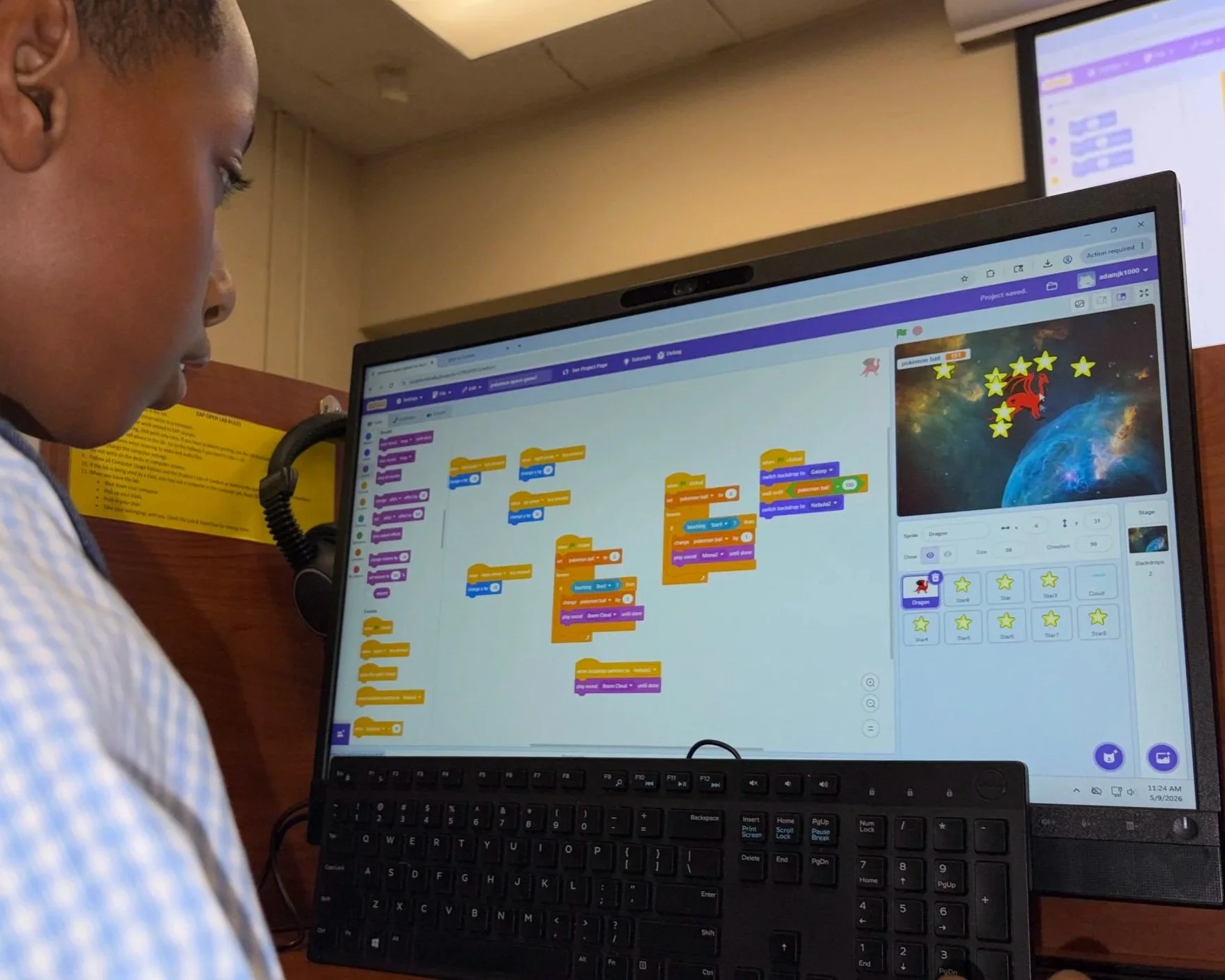
During this eight-week, hands-on program at Saint Paul College, kids in grades 3–6 use Scratch, a visual programming platform, to learn how coding works by creating interactive projects, games, and animations.
Rather than beginning with complex programming syntax, Scratch allows students to focus on the thinking behind the code. They’ll learn how to:
Break larger problems into smaller steps
Create sequences and instructions
Use events, loops, conditions, and variables
Test ideas, identify problems, and make corrections
Build interactive games, animations, and projects
Strengthen computational thinking and problem-solving skills
Scratch or Python: Where Should My Child Start?
If your child is new to coding, Scratch is typically the best place to begin.
Scratch helps students understand the logic and problem-solving behind programming before progressing into text-based coding languages such as Python.
As students become more comfortable and demonstrate readiness, BDPA Twin Cities instructors can help families understand when it may be appropriate for their child to advance to Python.
Fall 2026 Scratch Coding Class
Dates: Saturdays, September 26–November 14, 2026
Time: 10:00 AM–1:00 PM
Location: Saint Paul College, 235 Marshall Avenue, Saint Paul, MN 55102
Grades: 3–6
Format: In-person | 8 consecutive Saturdays
Experience: No previous coding experience required
Cost to Families: No cost
Eight Saturdays to Build a Strong Foundation
Each Saturday builds on what students learned the week before. Families should apply with the intention of having their child participate throughout the full eight-week program.
Space is limited, and students must apply for consideration.
Applications close September 15, 2026.
See if your child qualifies and apply for a Fall 2026 spot today.
BDPA Twin Cities
Advancing Technology, From the Classroom to the Boardroom
Building skills. Developing leaders. Creating community.